
























































































Female erectile tissue: your body has its own superpowers
Long ignored by medicine, the network of erectile tissue present in the female body extends for nearly 10 centimeters — and the majority of people have no idea. Yet, this tissue is everywhere: in the clitoris, of course, but also in the vestibular bulbs, the Bartholin's glands, and parts of the vaginal walls. Like its male equivalent, it fills with blood under the effect of arousal, causing a true erection — internal, invisible, but very real. This complex architecture explains why certain areas are more sensitive than others, why lubrication occurs, and why the pleasure felt can vary so much from one person to another. Your anatomy is not a mystery — it was just waiting for the right questions to be asked.
Why knowing your erectile tissue better really changes things
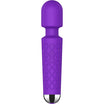
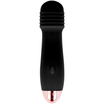
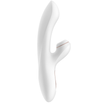
Understanding how your internal erection works means first understanding your own pleasure without relying on an external instruction manual. When you know that the clitoris extends in wings and roots beneath the skin, you understand why certain positions or toys create sensations that others never replicate. It is also a concrete asset for a couple: talking about one's own anatomy with precise words transforms an awkward conversation into a useful exchange. Finally, knowing this tissue helps in choosing suitable accessories — a clitoral stimulator, an air-pulse sex toy, or an internal vibrator do not activate the same areas. Knowing what you are looking for is already half the way to finding what you want.
The questions we really ask ourselves
Is the clitoris really erectile tissue?
Yes, and that is even its main characteristic. The clitoris is composed of almost 100% erectile tissue. Under the effect of arousal, it can double in volume. The visible part — the glans — is only the surface of a much larger organ, buried under the skin and around the vagina.
Why are some areas more sensitive depending on the level of arousal?
Because erectile tissue, when engorged with blood, physically brings nerve areas closer to the surface of the skin. A person who is not very aroused and a person who is very aroused literally have different anatomies at that moment — which explains why the same touch can be neutral or intense depending on the timing.
Can toys "get" this tissue used to them and make it less reactive?
This is a persistent misconception, but no serious study validates permanent desensitization. A slight temporary habituation may exist with very intense vibration used for a long time — but a short break is enough to reset everything. Exploring different types of stimulation remains the best strategy.
Also explore: Erectile dysfunction · Female desire