































































Female desire: what your body already knows
For a long time, you were led to believe it was complicated, fickle, almost elusive. And yet: according to sexology research, female desire is just as powerful as men’s — it simply functions differently, and often based on different triggers. A study published in Archives of Sexual Behavior reveals that more than 70% of women surveyed describe their desire as fluctuating based on the emotional and sensory context — not on a fixed biological clock. In other words, it’s not a breakdown, it’s an architecture. Female pleasure responds to atmosphere, safety, curiosity, touch, and words. It doesn't necessarily turn on first — but when it’s there, it’s absolute. Understanding this changes everything: for yourself, for your relationships, and for what you choose to explore.
Your desire is not something to be fixed — it is simply waiting for you to speak its language.
Why understanding your desire really changes things
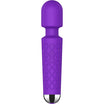
Knowing your own desire is, first and foremost, gaining confidence. When you know what turns you on — an atmosphere, a type of stimulation, a state of mind — you stop wondering if you are "normal." You start communicating with your partners in a way that is clearer, more honest, and more satisfying for everyone. It is also a question of health: regular pleasure reduces stress, improves sleep, and strengthens the connection with your body. And concretely, when choosing a sex toy or an accessory, understanding what you are truly looking for — clitoral stimulation, a feeling of fullness, gentle vibrations — allows you to make purchases that actually suit you, not those suggested by an algorithm. Fewer unused drawers, more moments that matter.
Frequently asked questions about female desire
Why does my desire fluctuate so much from one week to the next?
This is completely normal and widely documented. Female desire is described as responsive or contextual for many people: it is triggered in response to pleasant stimulation or a safe atmosphere, rather than occurring spontaneously. The hormonal cycle, stress, sleep quality, and emotional context all play a direct role. It’s not inconsistency — it’s sensitivity.
How can you jump-start your desire when you’re feeling flat?
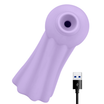
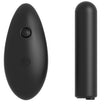
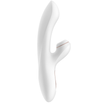
Before adding, start by removing what smothers it: fatigue, performance pressure, screens in bed. Then, curiosity is often the best aphrodisiac: exploring on your own through masturbation, reading erotica, or simply noting what attracts you without censoring yourself. Accessories designed for gentleness — like a clitoral vibrator — can also help you reconnect with your body without pressure.
Can female desire really be stronger than that of men?
Yes — and science confirms it with considerable enthusiasm. Brain imaging studies show that the female cerebral cortex processes erotic stimuli with comparable, if not superior, intensity. What differs is often the context required to access it. Simply put: the engine is there, it just likes the car to be properly warmed up before starting.
Also explore: Male desire · Female erectile tissue