











































Vibrator: the guide to choosing and enjoying pleasure
Whether enjoyed solo or with a partner, pleasure has evolved significantly in recent years—and that's good news. Today, more than one in three people regularly use an intimate toy, according to several European studies on sexuality. Yet, when it comes time to buy, the choice can seem intimidating: dozens of shapes, sizes, functions, and a vocabulary that sometimes resembles a dishwasher manual.
A vibrator is simply an accessory designed to produce vibrations and stimulate the body—externally, internally, or both at once. Some target the clitoris, others the G-spot, and some are designed for couples or use during penetration. The real question isn't "Is this for me?", but rather "Which one corresponds to what I want to explore?"
Because your body deserves to be asked the right questions—not the embarrassed ones.
Why choosing the right model makes all the difference
A bad choice often means a closed drawer and a discarded idea. A good choice is a discovery that redefines what you thought you knew about your own pleasure. Starting with a model adapted to your level of experience is the difference between a pleasant sensation from the very first use and unnecessary frustration.
Beyond immediate pleasure, regular stimulation helps reduce stress, improve sleep, and strengthen your connection to your body—these are documented benefits, not marketing slogans. And if you have a partner, integrating a toy into shared intimacy can open up conversations and experiences you might not have had otherwise.
Choosing well also means avoiding porous or irritating materials. A toy made of medical-grade silicone, ABS, or borosilicate glass is a toy that takes care of you as much as you take care of it.
Where to start: the types that suit you
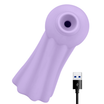
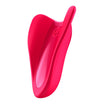
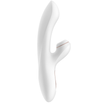
If you're just starting out, compact clitoral stimulators are often the best entry point: discreet, easy to handle, and incredibly effective for external stimulation without pressure. Air-pulse stimulators, meanwhile, replicate a sensation of suction around the clitoris—an experience many describe as a revelation.
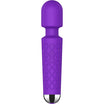
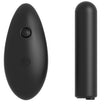
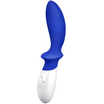
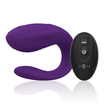
Do you want to explore internal stimulation? G-spot vibrators have a curve designed to precisely target that area. Dual stimulation models combine both in a single device. And if you're looking to share the pleasure, wearable or remote-controlled vibrators are made for that.
This entire selection—from entry-level models to more advanced ones—is waiting for you in our vibrator collection. And if you want to go further before buying, our guide "How to choose your vibrator?" answers all your questions, straightforwardly.
Frequently asked questions
Which vibrator should I choose when starting out?
For a first time, lean toward a compact model with external stimulation and few vibration modes so as not to get overwhelmed. Medical-grade silicone is the most recommended material: soft, non-porous, and easy to clean. The goal is simplicity—not high performance. You can refine your selection once you know what you like.
Are vibrators used only solo?
Not at all. Many models are designed to be used by two people, during or outside of penetration. Remote-controlled or app-connected versions even add a dimension of play and complicity. Integrating a toy into a relationship is often a way to explore together, not to replace anything.
Can the sound of a vibrator be heard through walls?
That is the question everyone thinks about but is afraid to ask. Most recent models are designed to be discreet—under 50 decibels, which is quieter than a normal conversation. Some are even described as "whisper quiet." If discretion is a priority, check the product descriptions: the noise level is often indicated there.
Also explore: Vibrator cleaning · Clitoral stimulator